Living with Reactivity & Aggression
What You Can Do Right Now — and When to Get Help
First, what made you look for a trainer today?
Step 1 of 2
Serving Westchester & Fairfield for 12 Years
Select all that apply
Free · No commitment required · Investment discussed on the call
What’s inside this guide
- A six-point checklist to tell whether your dog is reactive, aggressive, or both — and why that difference changes the fix
- The distance rule: how to find your dog’s threshold and run 5-minute sessions three times a day
- The four mistakes that make reactivity worse, including the one almost every owner makes on the leash
- What real progress looks like in the first 7–14 days, measured in small shifts instead of miracles
- The five situations where you should stop working alone and bring in a trainer
8 min read · free, yours to keep — or read the whole thing below
Stuck on your dog specifically?
Guides are written for the average dog, and nobody has one. Emily will spend 10–15 minutes on the phone, tell you what she thinks is going on, and be honest about whether you need us at all.
Schedule a free call with Emily ›Living with a Reactive or Aggressive Dog
If your dog lunges, growls, or snaps at other dogs or people, you already know the toll it takes. Walks become stressful. Visitors feel risky. You start avoiding situations entirely. You're not failing your dog — you're dealing with something that requires specific tools most owners were never taught.
Is This Your Dog?
- Barks, lunges, or pulls hard toward other dogs on leash
- Growls or stiffens around strangers entering your home
- Guards food, toys, or resting spots from family members
- Snaps or has bitten when startled or cornered
- Escalates quickly — goes from calm to explosive with little warning
- Gets worse in tight spaces like sidewalks, vet lobbies, or doorways
If you checked two or more, your dog is likely reactive, aggressive, or both. The distinction matters — reactivity is an overreaction to a trigger, while aggression involves intent to harm. Both are treatable but with different approaches.
What to Try Right Now: The Distance Rule
The single most impactful thing you can do today is increase the distance between your dog and their trigger. Reactivity and aggression intensify with proximity. If your dog loses it when another dog is 20 feet away, start working at 40 feet.
- Find your dog's threshold distance — the point where they notice a trigger but can still respond to you. This is your starting line.
- Reward calm observation. When your dog sees the trigger and looks at you instead of exploding, mark it immediately with a treat or a calm "yes."
- Practice 3 times a day for 5-minute sessions. Short, frequent repetitions build new neural pathways faster than one long session.
- End before your dog fails. If you push past threshold, the session reinforces the reactive pattern instead of replacing it.
Common Mistakes That Make It Worse
- Correcting after the explosion. If your dog is already lunging and barking, corrections add stress to an already flooded brain. Interrupt and create distance instead.
- Forcing greetings. Making your reactive dog "say hi" to prove they can handle it almost always backfires. Your dog isn't ready — and you're confirming their fear that close encounters are bad.
- Avoiding all triggers entirely. Total avoidance feels safer, but it prevents your dog from ever learning a new response. Controlled exposure at the right distance is how progress happens.
- Tensing up on the leash. Your dog reads your body language. A tight leash and tense arm tell them something is wrong — which confirms the threat.
How to Tell It's Working
Progress with reactive and aggressive dogs is measured in small shifts, not overnight transformations. Within 7–14 days of consistent threshold work, look for:
- Your dog noticing the trigger but choosing to look at you
- Recovery time getting shorter after a reaction
- The threshold distance shrinking — they can handle triggers a few feet closer
- Fewer "zero to sixty" explosions
When to Get Professional Help
Threshold work is powerful, but some situations need professional hands:
- Your dog has bitten or broken skin
- Triggers are unavoidable (other dogs in your building, family members)
- The behavior is escalating despite consistent work
- You feel unsafe managing your dog in public
- Resource guarding has spread to multiple items or locations
These aren't signs of failure — they're signs you need a trained eye to identify what's driving the behavior and build a structured protocol around it. Our Day Train program addresses reactivity and aggression through controlled daily exposure with a certified trainer, and we coach you at every pickup so results transfer home.
“During walks or even in the car he’d lunge, growl and bark at any dog even if it was far down the road. … In group class he can now sit five feet from another dog and not react.”
Erin N. — Rescue, dog reactivity · Google review
Ready for a plan specific to your dog? Call (914) 687-5532 or schedule a free training-fit call with Emily.
Schedule a Free Training-Fit Call with Emily ›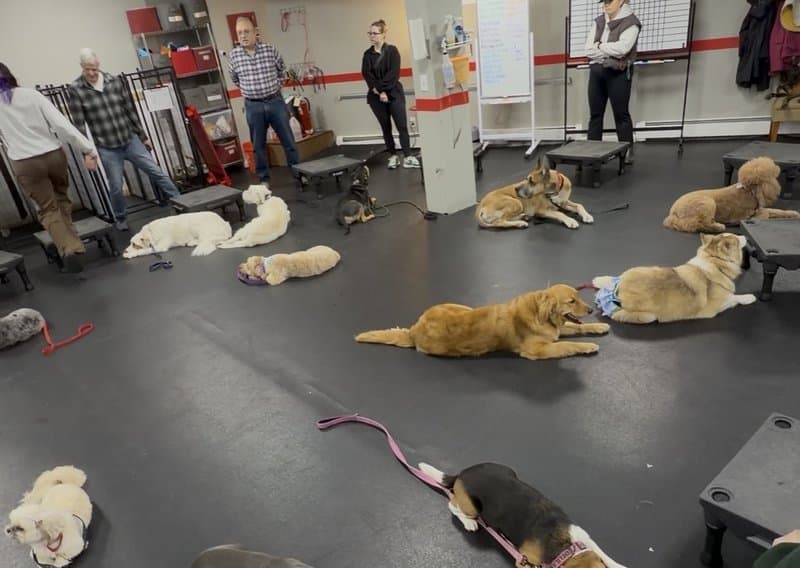
How It Works
- 1Schedule your free training-fit call
- 2Talk with Emily about your dog and goals
- 3Choose the right training plan or in-person evaluation
★★★★★4.9 Stars · 197 Reviews
🏆 Best of Westchester 2025 & 2026
📍 5,000 Sq Ft Facility — Valhalla, NY
Premium training for owners ready for a structured plan. Serving Westchester and nearby Fairfield County owners from our Valhalla facility.
ANY AGE. ANY BREED. ANY PROBLEM.
We train all dogs, regardless of age, breed, or behavioral issue. Whether you're starting your puppy on a path to lifelong success or teaching your older dog new skills, we've got you covered.
OBEDIENCE & BEHAVIOR MANAGEMENT
We provide individualized one-on-one dog training programs tailored to meet your unique goals and specific needs.
GROUP TRAINING
Our follow-up group training continues after our one-on-one programs to ensure you and your dog keep achieving your goals.