Become a Therapy Dog Handler
What It Takes — and How to Get Started
First, what made you look for a trainer today?
Step 1 of 2
Serving Westchester & Fairfield for 12 Years
Select all that apply
Free · No commitment required · Investment discussed on the call
What’s inside this guide
- The temperament and obedience baseline your dog needs before testing is realistic
- The certification path step by step, and what each stage actually tests
- What to practice at home — including the skills dogs most often fail on
- The common mix-ups between therapy dogs, service dogs, and emotional support animals
- How to get started in Westchester County, and where teams typically get placed
6 min read · free, yours to keep — or read the whole thing below
Stuck on your dog specifically?
Guides are written for the average dog, and nobody has one. Emily will spend 10–15 minutes on the phone, tell you what she thinks is going on, and be honest about whether you need us at all.
Schedule a free call with Emily ›So You Want to Be a Therapy Dog Team
Therapy dogs bring real, measurable comfort to people in hospitals, schools, memory care facilities, and crisis situations. If you've ever watched your dog light up a room and thought "they should be doing this for people who need it" — you might be right. But therapy work requires more than a friendly dog. Here's what it actually takes.
Does Your Dog Have What It Takes?
Not every good dog is a good therapy dog. The work requires a specific temperament:
- Rock-solid calm. Your dog must stay relaxed around wheelchairs, walkers, beeping machines, sudden noises, and unpredictable movements.
- Comfort with strangers touching them. Patients may pet awkwardly, grab fur, or touch ears and paws. Your dog must accept this without flinching or pulling away.
- Zero reactivity. A dog that barks at other dogs, stiffens around strangers, or startles at loud sounds is not ready for therapy work — yet.
- Reliable obedience under distraction. Sit, down, stay, leave it, and a solid recall — all performed in noisy, busy environments.
- Genuine enjoyment of people. A dog that tolerates interaction is not the same as one that seeks it out. Therapy dogs should genuinely light up around people.
The Certification Path
Therapy dog certification in Westchester County typically involves:
- Obedience foundation. Your dog needs reliable obedience that goes well beyond basic commands. Think: holding a down-stay for 5+ minutes in a hospital lobby while a stretcher rolls by.
- CGC (Canine Good Citizen) test. Most therapy dog organizations require this as a prerequisite. It tests basic manners — greeting strangers, walking through crowds, sitting politely for petting.
- Therapy-specific evaluation. Beyond CGC, therapy certification tests your dog's response to medical equipment, erratic movement, loud sounds, and unusual surfaces.
- Handler training. You need to learn facility protocols, infection control basics, reading your dog's stress signals during visits, and knowing when to end a session.
Preparing Your Dog: What to Practice
- Settle on command. Practice having your dog lie at your feet in busy public spaces — coffee shops, outdoor seating areas, parks. Build duration gradually to 15–20 minutes.
- Handling exercises. Have friends and family handle your dog's paws, ears, tail, and mouth. Reward calm acceptance. Practice being touched from unexpected angles.
- Novel environment exposure. Take your dog to new places weekly — different buildings, surfaces, sound environments. The more variety, the more adaptable they become.
- Impulse control around food and objects. Therapy environments have food trays, medication cups, and personal items. Your dog must ignore all of it.
Common Misconceptions
- "My dog is friendly, so they'd be a great therapy dog." Friendliness is necessary but not sufficient. An overly excited dog who jumps and licks faces isn't therapeutic — they're overwhelming.
- "Small dogs can't do therapy work." Some of the best therapy dogs are small breeds. They can sit on laps and beds, which many patients prefer.
- "Therapy dogs and service dogs are the same thing." Legally and functionally, they're completely different. Therapy dogs visit people in facilities. Service dogs assist their specific handler with a disability.
How to Tell You're Ready
- Your dog can hold a down-stay for 5+ minutes in a new, busy environment
- Strangers can pet and handle your dog without any stress signals (lip licking, whale eye, pulling away)
- Your dog recovers quickly from startling sounds or movements
- You can read your dog's stress signals reliably and know when to intervene
Getting Started in Westchester
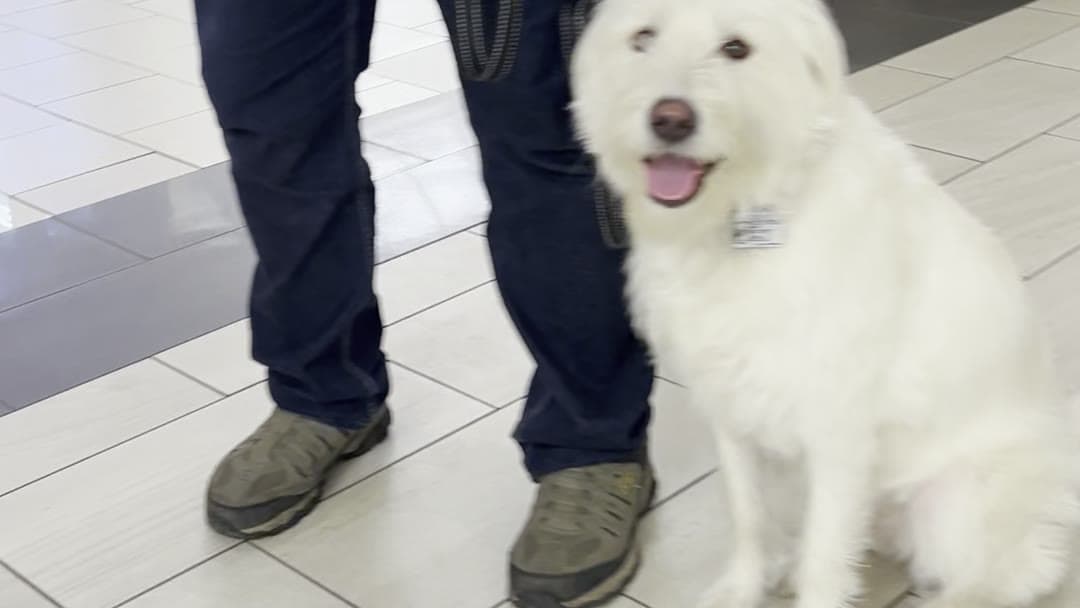
Sit Means Sit Dog Training of Westchester partners with K-9 Caring Angels to train and certify therapy dogs serving hospitals, schools, and care facilities throughout Westchester and Fairfield Counties. Our therapy team page has details on the program, the facilities we serve, and the dogs currently making visits.
The training foundation for therapy work is advanced obedience — the same skills built in our Day Train program. Dogs that complete our training and meet temperament standards are eligible to join the K-9 Caring Angels certification track.
“Went in just wanting to be able to walk my dog on a leash and came out with a therapy dog that now visits a high school on a regular basis!”
Ray F. — Therapy dog · Google review
Interested in the therapy dog path for your dog? Call (914) 687-5532 or schedule a free training-fit call with Emily to talk about where your dog stands and what it would take to get them ready.
Schedule a Free Training-Fit Call with Emily ›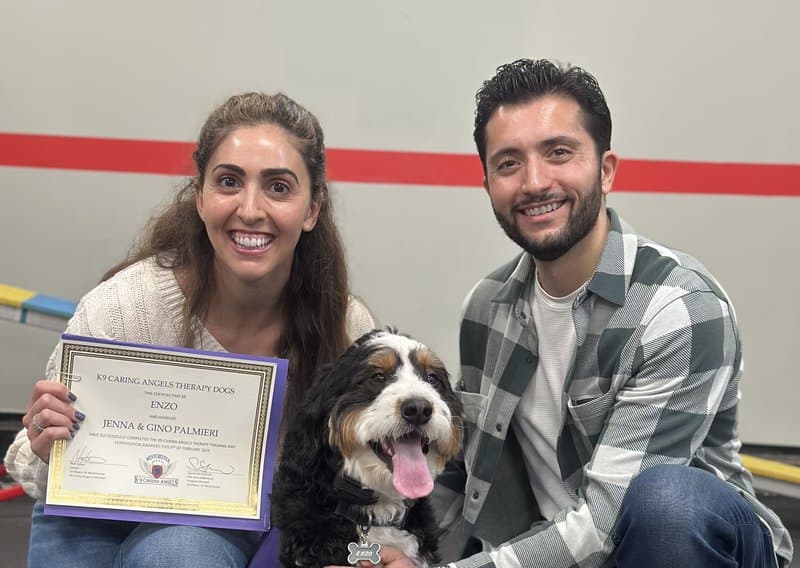
How It Works
- 1Schedule your free training-fit call
- 2Talk with Emily about your dog and goals
- 3Choose the right training plan or in-person evaluation
★★★★★4.9 Stars · 197 Reviews
🏆 Best of Westchester 2025 & 2026
📍 5,000 Sq Ft Facility — Valhalla, NY
Premium training for owners ready for a structured plan. Serving Westchester and nearby Fairfield County owners from our Valhalla facility.
ANY AGE. ANY BREED. ANY PROBLEM.
We train all dogs, regardless of age, breed, or behavioral issue. Whether you're starting your puppy on a path to lifelong success or teaching your older dog new skills, we've got you covered.
OBEDIENCE & BEHAVIOR MANAGEMENT
We provide individualized one-on-one dog training programs tailored to meet your unique goals and specific needs.
GROUP TRAINING
Our follow-up group training continues after our one-on-one programs to ensure you and your dog keep achieving your goals.